Showing posts with label Coding. Show all posts

Top Programming Forums To Kick Trouble Out Of Your Code


I am a computer science student, and like all others in my class I am an expert in getting into trouble while coding. :-D
Like me I am sure you must have also faced problems while coding, whatever language you are working on. Getting into trouble while creating programs is common among coders, even giants like Facebook often have to face some bugs in their code.
So what do you do when you face problems while programming?
Ask a friend or a professional, right?
At first we’ll ask our friends and see if anyone of them can troubleshoot the problem. It is a wise decision if your friends are also programmers.
If your friends are normal boring people, not programmers then you have no other option to search it on the internet and go for expert opinion.
That’s what we are going to talk about today, the places where you can find the answers to your questions.
The community of experienced and professional coders is out there to help you with your problems.
The first one in my list is…

Stack Overflow

stackoverflow

It is probably the best and the biggest programming forum on the web as far as I know. You need to register before asking any question on the forum.
The best part about this forum is that it learns from its users, you ask a question. People answer it and out of all those expert opinions you get on your question Stack Overflow will sort the most voted, most liked answer on the top.

Code Project

code project

It has a huge user base and everyone is there to help you out. All the queries are sorted in different categories according to the language.
It also has additional sections like System Administration, Databases, Web Development etc.

DaniWeb

daniweb

It is the third one in my list and one of the top three. You can ask your questions in different categories like Game development, mobile development, internet marketing and so on.

Coding Forums

coding forums

It is one of the top five and is especially for web design related queries.
Your questions related to web design and development are sorted based on client side and server side of the system.

Dev Shed Forums

devshed

With over a million members and the number of threads equaling to at least four times of that this forum is a great place to solve all your queries. You can ask questions related to web design, system administration, web hosting and hardware queries.

Over to You

These were the top 5 programming forums to solve your coding related queries. Before you sign up on any one of them keep in mind that every forum has its own policies and if your question doesn’t comply on them probably you are going out.
And while asking questions please try to be a bit generous because all of us geeks and coders hate to be treated for-granted :-D
Everyone in this country should know how to program a computer because it teaches you how to think.
-Steve Jobs

Download free pdf ebook in Dynamic Programming


difference between Divide and Conquer algorithm and Dynamic Programming - free ebook in dynamic programming
Divide and Conquer vs Dynamic Programming
As we know ,Dynamic programming is a powerful technique for solving problems that might otherwise appear to be extremely difficult to solve in polynomial time. Algorithms built on the dynamic programming paradigm are used in many areas of CS, including many examples in AI (from solving planning problems to voice recognition). 
Here's best  free ebook in Dynamic Programming , which will surely prove quite useful for all beginners and intermediate coders.

Knapsack - Dynamic Programming and free PDF  ebook download
Knapsack - Dynamic Programming:  free PDF
 ebook download    
Topics Covered in this Dynamic Programming (pdf) ebook :
     1.    Shortest paths in dags
     2.    Longest increasing subsequences
     3.    Edit distance
     4.    Knapsack
     5.    Chain matrix multiplication
     6.    Shortest paths
     7.    Independent sets in trees

These were just heading, this ebook has numbers of challenging programming problems and examples  on Dynamic Programming.

Enjoy
You can download this ebook from here : DOWNLOAD


Best HTML/Javascript/DOm/CSS Hack Tricks


1. You can turn your browser into a notepad by pasting the following in the URL bar and hitting Return key.

data:text/html, <html contenteditable>

2.You can quickly run HTML in the browser without creating a HTML file:
Enter this in the address bar: 
data:text/html,<h1>Hello, world!</h1>

(This won't work in IE)
 You can make a page's CSS editable in the browser without using JS:
1
2
3
4
5
6
7
8
<!DOCTYPE html>
<html>
<body>
<style style="display:block" contentEditable>
body { color: blue }
</style>
</body>
</html>

(This also won't work in IE)

You can have the browser parse a URL for you like this:
1
2
3
4
5
var a = document.createElement('a');
a.href = url;

// any property of window.location works here:
document.write('The hostname of ' + url + ' is ' + a.hostname);

(Works in all major browsers)

You can invalidate a URL in the browser's cache by sending a PUT method xmlhttprequest to it:
1
2
3
4
5
var xhr = window.XMLHttpRequest ?
    new XMLHttpRequest() :
    new ActiveXObject('Microsoft.XMLHTTP');
xhr.open('PUT', url);
xhr.send(null);

(Works in all major browsers)

You can put multiple statements in an 
if
 block without using curly bracketslike this:
1
2
if (confirm("Do you wish to see two alerts?"))
  alert(1), alert(2);


3. Adding label tags around a checkbox or radio button ties that text to the checkbox. No more labelfor!

<label><input type="checkbox" name="option1">I Agree</label>


If the user clicks on "I Agree" it will select that checkbox.

4. You can create containers that maintain a constant aspect ratio by using padding-bottom as a percentage. The CSS spec says that padding-bottom is defined relative to the *width*, not height, so if you want a 5:1 aspect ratio container you can do something like this:

1
2
3
4
5
<div style="width: 100%; position: relative; padding-bottom: 20%;">
<div style="position: absolute; left: 0; top: 0; right: 0; bottom: 0;">
this content will have a constant aspect ratio that varies based on the width.
</div>
</div>


This is useful for responsive layouts where you want the width to adjust dynamically but want to keep, say, square photo thumbnails.

5. To make URLs automatically load from either 'http://' or 'https://' based on the current protocol, you can write them like this:

1
<script src="//domain.com/path/to/script.js"></script>


Source: Quora

Computer Programming: What are some real life good habits that programming gives people?


Persistence solving non-people problems - When something goes wrong, it is because some X has caused the wrong behavior.  You can test subsystems to reduce the possible space of X, until you finally find the root cause.  Programmers don't rely on miracle or luck for something to fix itself.

Logical thinking - This old joke has something that still rings true for programmers: An Accident and an Engineer, Manager, and Programmer
Computers use strict logic, and there's no way to "trick" a computer to do something.  You have to do what provably causes the computer to do that thing.  Programmers are used to thinking very strictly logically and will always test that X really causes Y in the context of C, for most situations.  It's not easy for mass media to trick or brainwash a programmer.

Abstraction ability - Programmers, or rather computer scientists, are used to thinking in abstractions.  The economy is a multi-agent system.  Human language is a communication protocol.  Reading is extracting semantics from literals.  Writing is representing semantics in literals.  Finding where my key is is a search problem (many algos and heuristics to solve this efficiently).  Arranging items in my room is a data structure problem.  Teamwork is a peer-to-peer system (not master-slave system).  By thinking this way we can apply common solution frameworks to common problem types.

Life optimization - From experience dealing with systems and performance, we'll always see ways to optimize things in life, like:
- Naming and reordering our real items in your room or our digital items for most efficient insertion and lookup
- Measuring throughput (not length) of grocery queues for minimum wait time, and optimizing path for grocery shopping for minimum time
- Rearranging tasks to match energy level of the day to maximize output
etc.
Probably only programmers with a certain personality does this.

Appreciation for technology that works - It's the hardest to create technology that seems to just work that people take it for granted.  The more noticeable ones are those with usability bugs so people mistakenly "feel" that the system is complex.  By working on technology, we get to appreciate how hard (and rewarding, and underappreciated) it is to make something so seamless that people are completely ignorant of what makes it work (like power grid, the internet, wireless communication, etc.).

SOURCE-QUARA

How to learn C Language


If you don't know the basics of computer programming, you shouldn't start by learning a programming language.

Instead, you should first learn the basic CONCEPTS behind all computer programming:
- Algorithms
- Data structures
- Boolean logic

For that, the following resources will come handy:

Online Wikibook: Data Structures
http://en.wikibooks.org/wiki/Data_Struct…

Online Wikibook: Algorithms
http://en.wikibooks.org/wiki/Algorithms

Book: Niklaus Wirth's "Algorithms + Data Structures = Programs"
http://www.inf.ethz.ch/personal/wirth/bo…

Book: Introduction to Algorithms
http://www.amazon.com/dp/0262032937/?tag…


This said, "The C Programming Language" by Brian Kernighan and Dennis Ritchie is THE BEST BOOK for learning the C language, though it assumes that you're familiar with the concepts listed above.

I wouldn't recommend an absolute newbie to learn C as a first language, though, because C is a rather low level language, and learning it can become frustrating. Besides, most sane people don't program directly in C nowadays, unless they're developing system software (such as operating systems, device drivers or software for microcontrollers) or they need the best performance and resource efficiency.

As a first language, I recommend you to learn Python. It's a modern, object-oriented programming language, which is not only great as a learning tool but also very useful in real life problems.

Online resources for learning Python:
http://www.alan-g.me.uk/
http://www.diveintopython.net/

Online Resources for learning C


If you want to learn C or C++ then here are some Internet resources that you can try out


You can use the search engine Google.com to find free tutorials, ebooks, forums, videos and other information
C ebook
http://www.google.com/search?hl=en&sourc…

There are many online forums for computer programming and etc...whenever you need advice or information for these programming languages then you should go to one of these forums because they are experts in programming and they can really be helpful

C forum
http://www.google.com/search?hl=en&sourc…


The website HowStuffWorks has good tutorials for C programming, Java, and etc.

C Programming
http://www.howstuffworks.com/c.htm


Cprogramming.com and Cprogramminglanguage.net have many good tutorials, programming tools, online forum, and etc. for learning C and C++ programming

http://www.cprogramming.com/tutorial.htm…

http://cprogramminglanguage.net/

xoax.net shows you how to download the FREE Microsoft's version of their Integrated Development Environment (IDE) Visual C++ Express and use it to create C++ programs

They also include many video tutorials for learning C++ and graphics programming with OpenGL, MFC, Win32 and etc.:

http://xoax.net/info/sitemap.php


Sparknotes.com has many good study guides for C++, Computer Science and for various other subjects and tests

http://www.sparknotes.com/cs/


These websites have many free tutorials for learning about C++, Excel and Access, Java, Visual Basic, and etc.

http://www.cplusplus.com/doc/tutorial/
http://www.functionx.com/cpp/

YouTube has videos for learning almost any subject or topic
C Programming

http://www.youtube.com/user/thenewboston…

http://www.youtube.com/view_play_list?p=…


Good luck and I hope this helps!

Free ebook for Data Structure in C/C++,C#,Ruby,Phython


In this post, I have provided you free data structures and algorithms ebooks which guides you to learn data structures through Java, C++, C#, Python, Ruby, etc. This free data structures and algorithms ebooks will teach you optimization algorithms, planning algorithms, combination algorithms, elliptic curve algorithms, sequential parallel sorting algorithms, advanced algorithms, sorting and searching algorithms, etc.
Following are the free data structures and algorithms download links. Visit these links and familiarize with data structures through different languages and algorithms.

Show your support by liking us on facebook , If you have any doubt please comment.


free ebook for data structure
  1. Data Structures and Algorithms Book Collection View/Download
  2. Global Optimization Algorithms: Theory and Applications View/Download
  3. Algorithms View/Download
  4. Planning Algorithms View/Download
  5. Algorithmic Mathematics View/Download
  6. Combinatorial Algorithms View/Download
  7. Algorithms Course materials View/Download
  8. A Genetic Algorithm Tutorial View/Download
  9. Average Case Analysis of Algorithms on Sequences View/Download
  10. Algorithms of Modular Elliptic Curves View/Download
  11. Computational Geometry: Methods and Applications View/Download
  12. Lecture Notes on Approximation Algorithms View/Download
  13. Approximation Algorithms View/Download
  14. Knapsack Problems View/Download
  15. Lecture Notes on Algorithms View/Download
  16. Algorithms for Programmers View/Download
  17. The Art of Computer Programming: MMIX - A RISC Computer View/Download
  18. Sequential and Parallel Sorting Algorithms View/Download
  19. Graph - Theoretical Algorithms View/Download
  20. Lecture Notes on Optimization View/Download
  21. Convex Optimization View/Download
  22. Combinational Algorithms View/Download
  23. Algorithms in the Real World Lecturer Notes View/Download
  24. Information Theory, Inference, and Learning Algorithms View/Download
  25. Problems on Algorithms View/Download
  26. Data Structures and Algorithms View/Download
  27. Data Structures through Java View/Download
  28. Data Structures and Algorithms View/Download
  29. Design and Analysis of Computer Algorithms View/Download
  30. Data Structures View/Download
  31. Notes on Algorithms View/Download
  32. Notes for the Course Advanced algorithms View/Download
  33. Algorithms and Data Structures in VLSI design View/Download
  34. Introduction to Algorithms View/Download
  35. Algorithms View/Download
  36. Information Retrieval View/Download
  37. Lecture Notes on Algorithms Analysis and Computational ComplexityView/Download
  38. Sorting and Searching Algorithms View/Download
  39. Efficient Algorithms for Sorting and Synchronization View/Download
  40. Algorithms and Complexity View/Download
  41. The Algorithms Design Manual View/Download
  42. Handbook of Algorithms and Data Structures View/Download
  43. Computer Programming Algorithms Directory View/Download
  44. Dictionary of Algorithms and Data Structures View/Download
  45. List of Algorithms View/Download
  46. GNU libAVL (Binary search tree and balanced tree) View/Download
  47. Collected Algorithms View/Download
  48. The Stony Brook Algorithm Repository View/Download
  49. Data Structures and Algorithms with Object Oriented Design Patterns in JavaView/Download
  50. Data Structures and Algorithms with Object Oriented Design Patterns in C++View/Download
  51. Data Structures and Algorithms with Object Oriented Design Patterns in C#View/Download
  52. Data Structures and Algorithms with Object Oriented Design Patterns in Python View/Download
  53. Data Structures and Algorithms with Object Oriented Design Patterns in RubyView/Download

Tags: Free Ebook, Ebook for Data Structure, Data Structure in C/C++,Data Structure in Ruby,Phython,ebook free for data structure 

TOP 5 COMPUTER PROGRAMMERS IN THE WORLD.


"Here's  all about top 5 Coders/Programmers in this world, read about them, learn from them & inspire yourself from their story"

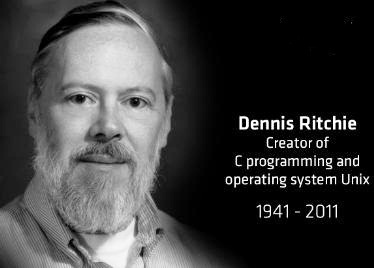
1. Dennis Ritchie


Dennis Ritchie-Top 5 Programmers in the world
·         Dennis Ritchie (1941-2011) was an American Computer Programmer. Sir. Ritchie developed "C" programming language and co-developer of Unix Operating system. Dennis Ritchie worked for Alcatel-Lucent and for Bell labs.

·         Dennis Ritchie changed digital era by creating "C" programming language. Lisp, Visual Basic, Pascal,COBOL, Turbo pascal 7.0, PL/1, ADA, these are the programming languages are written in C programming language.


·          "C" is a best programming language for newbie programmers, who are interested in learning codes. 

·          Dennis Ritchie and his colleague Ken Thompson
received the Turing award for implementing and developing UNIX
operating system in the year 1983.

 2. Mark Zuckerberg
Mark Zuckerberg-Top 5 Programmers in the world

·         Mark Zuckerberg created Facebook.com when he was 20 years old, Mark and his Harward university friends helped to build Facebook. When Facebook started it was only available for Hardward students

·          Facebook website is mainly written in C++ and PHP programming language. Mark is very passionate about programming and
codes, In his early age he created a messenger called "Zucknet" that
allowed to chat with all computers. 

·         In 2003 Mark created Facemash, the website is all about comparing
two Harward university students side by side "Hot or Not" contest.

·         Some developers re-created Facemash - http://facemash.com.au

·         In last year Mark Zuckerberg earned more than $2 billion worth
stock. And worth $15B according to report of usnews.


   3. Steve Wozniak
Steve Wozniak-Top 5 Programmers in the world

·      The Brain behind Apple Inc. - Steve Wozniak is an Computer scientist and Programmer. SteveWoz is well known for developing Apple-1 and Apple-2 :
·      In early 1976 Woz and Jobs developed a Hardware ,CircuitBoard design and Operating system for Apple- 1 . Apple 1 priced around $666, And sold 50 system boards to Paul Terrell (Computer shop owner) . After Apple-1, Woz developed first Color graphics personal computer with Integer BASIC programming language and they named it as a Apple-2. For sometime Steve Wozniak was teaching elementary school students about computer. In 2006 Steve Woz published his autobiography iWoz: From Computer Geek to Cult Icon. Now Steve Woz is working for Fusion-io as a Chief Scientist.

4. Bill Gates
Bill Gates-Top 5 Programmers in the world


Bill Gates: Founder of world's largest software company Microsoft. And also Co-chairman of Gates Foundation. Bill gates is one of the world's richest man in he world. Bill started working with computer when he was 13 years old.

·      When he was 17 Bill Gates formeda company called Traf-o-data. And In the age of 20 Bill Gates founded Microsoft Inc.
·      Bill Gates also created MS-DOS Operating system
and Windows OS. Currently Microsoft is one of the valuable company in the world. In 2012 Microsoft earns $73.72 Billion.

5. Linus Torvalds 
Linus Torvalds-Top 5 programmers in the world
·      Linus Torvalds is a software engineer, hacker and project coordinator. In 1991 Linus Torvalds released Linux 0.11 which is written in C programming language.
·       Linux supports more than 20+ platforms and Linux is a free and open source operating system, Open source means that you can get the source code of the operating system for free.


 The Top 5 Programmers lists ends here according to our Blog Team but there are thousands of best programmers are there Larry page, Brin sergy, Bjarne Stroustrup.